
BeReal. Your friends for real.
VOODOOSocial
4.59.74K Reviews
- Version
- 3.91.2
- Installs
- 10.00M
- Age Rating
- Teen
Screenshots

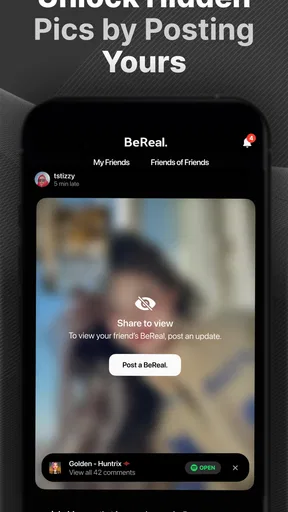
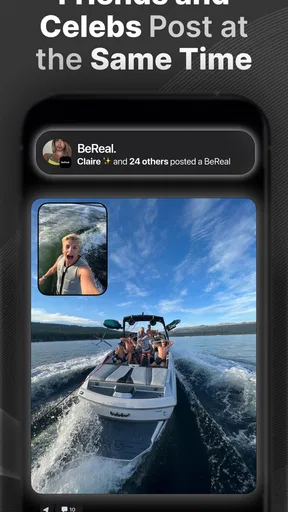
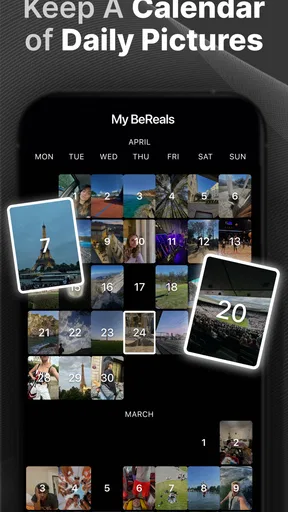


Our Review of BeReal. Your friends for real.
 Analysis by Appyee
I approached BeReal expecting another feed to fill during spare moments, but its appeal is almost the opposite. This free social app, created by VOODOO, is built around a simpler question: what are your friends doing at roughly the same moment as you? That change in timing makes it feel less like a stage for polished updates and more like a small daily check-in.
That idea will not suit everyone. If you want endless entertainment, detailed editing, public discovery, or a carefully organized profile, other kinds of social apps may fit better. If you are tired of performing online and mainly want to see familiar people in ordinary situations, this is one of the more distinctive options I have used. My experience was strongest when I treated it as a shared habit rather than another service demanding constant attention.
How to decide whether BeReal fits your social life
The first decision is about the kind of interaction you actually want. BeReal is listed in the social category, but it does not behave like a conventional network where you can spend an hour browsing a large stream of public posts. Its store summary calls it “Not another social network,” and that is a useful expectation setter. The app’s central rhythm is based on a daily prompt that encourages you to post a current view of your life rather than prepare content whenever you feel like it.
That timing matters more than it sounds. A photo taken while I was waiting for a kettle, walking between errands, or sitting at my desk had a different feeling from a picture I had planned in advance. The ordinary details became the point. I was not trying to make a room look impressive or find the most flattering angle; I was simply showing where I happened to be.
Before installing it, ask yourself whether your close friends will genuinely use it. This is not an app I would choose mainly for browsing strangers. Its value depends heavily on having people you know on the other side of the daily prompt. A lively group can make the app feel warm and spontaneous, while an empty friend list makes the experience feel like a camera waiting for a reason to open.
There is also a useful distinction between social connection and social entertainment. Traditional feeds are good at giving me something to watch whenever I am bored. BeReal is better at creating a small moment of contact with people I already care about. If you want a replacement for a video feed, you may find it too limited. If you want a low-pressure way to keep up with friends who live elsewhere, its narrow focus can be an advantage.
The app is free, carries a Teen content rating, and supports devices running Android 8.0 or later. Those details make it accessible to many users, but younger users should still think carefully about who they add and how comfortable they are sharing everyday surroundings. A spontaneous picture can reveal more context than intended, especially when it includes a workplace, school, street, or other people.
The daily prompt changes how posting feels
The strongest part of the design is the pressure it removes from preparation. Because the point is to respond in the moment, I spent less time wondering whether a picture was worth publishing. That does not mean every post feels effortless. There can still be an awkward pause when the prompt arrives during a private conversation, while I am busy, or when the front and rear cameras show two completely different stories.
That two-sided view is one of the app’s most recognizable choices. It gives friends more context than a carefully framed selfie, but it also makes the result less controlled. I liked that trade-off because it made posts feel more honest. Someone might appear in one camera view while the other shows a meal, a commute, or a cluttered table. Those details often started better conversations than a polished portrait would have.
A practical tip is to decide in advance how you will handle inconvenient prompts. I found it easier when I treated the notification as an invitation rather than an emergency. If I was genuinely unavailable, I could return when I had a suitable moment instead of interrupting something important. That approach preserved the app’s spontaneity without allowing it to dictate my schedule.
Another small but important habit is checking the background before posting. The app encourages immediacy, but immediacy should not replace basic judgment. I would avoid showing documents, screens with private information, house numbers, or people who have not agreed to appear. The best “real” post is not necessarily the least careful one; it is the one that feels natural while respecting the situation.
What I found useful beyond the obvious camera moment
My favorite use was not documenting special events. It was keeping a lightweight thread with friends whose routines rarely overlap with mine. One friend might post from a train, another from a kitchen, and another from a late work shift. None of those images needed a caption explaining everything. The shared prompt gave us a reason to exchange a quick reaction, and that was often enough to maintain a sense of presence.
A second useful workflow is using the app as a conversation starter rather than a diary. When I saw a friend’s unusual meal, rainy walk, or half-finished project, I had something specific to ask about. This worked better than sending a vague “how are you?” message because the image supplied a small opening. For people who struggle to keep conversations going, that context can make contact feel more natural.
I also noticed that the app works best when a group agrees on its purpose. If everyone expects a relaxed snapshot, the experience stays comfortable. If one person treats every post as a performance and another posts only once in a while, the social rhythm becomes uneven. A quick conversation with friends about whether the group is for close updates, casual humor, or occasional check-ins can prevent misunderstandings.
The app’s limited format can even be helpful for people who overthink social media. There are fewer decisions to make than in a network built around captions, filters, hashtags, public replies, and profile presentation. I did not feel the same temptation to revise a post repeatedly. The useful trade-off is less control in exchange for less pressure to create.
Where BeReal wins against familiar social feeds
Compared with image-first networks, BeReal wins on immediacy and intimacy. A conventional photo feed often rewards composition, consistency, and presentation. That can be enjoyable, but it can also make ordinary users feel as though every update needs a purpose. Here, the everyday moment is not a failure to produce something impressive; it is the content.
Compared with short-video platforms, it wins by asking less of my attention. I am not encouraged to keep swiping through an apparently endless sequence. The experience is more like opening a group message at a particular point in the day. That makes it easier to use intentionally, although it also means there is less to do when I want passive entertainment.
Compared with messaging apps, it provides a more visual and simultaneous check-in. A direct message requires someone to decide what to say and when to send it. A shared prompt gives everyone a common occasion to participate. I found that especially useful in groups where people care about one another but do not maintain regular one-to-one conversations.
Its audience appears substantial: the app has an average rating of 4.5 from around 367 thousand ratings and more than 10 million installs. Those figures suggest that finding an active community is realistic, but they should not replace the more important question of whether your own friends are there. A large overall audience cannot make a quiet personal circle feel active.
Where another category may fit better
I would not recommend this as the main social app for someone who wants broad public reach. Artists, sellers, commentators, and creators who depend on searchable posts or a carefully managed identity may need a platform designed around discovery and presentation. BeReal’s charm comes partly from its smaller, more personal feeling, so it is not the natural choice for building a public audience.
It may also disappoint users who want reliable control over every image. The spontaneous format can produce unflattering angles, messy surroundings, or moments that simply do not translate well into a post. If your priority is editing, arranging a visual portfolio, or publishing only your best work, a conventional photo-sharing service is likely a better fit.
People who use social media mainly for news, specialist communities, or long discussions should look elsewhere too. A daily picture can create a prompt for conversation, but it is not a substitute for organized groups or detailed text exchanges. I would pair it with a messaging app rather than expect it to handle every kind of communication.
There is a privacy trade-off that deserves an honest mention. The more spontaneous the post, the less time there is to consider what the image communicates. Even with a private circle, friends can save, describe, or reshare things outside the original context. I would skip the app if sharing real-time glimpses of my surroundings made me consistently uneasy. No social routine is worth feeling watched.
Everyday scenario: using it without letting it take over
Imagine receiving the prompt during a normal weekday afternoon. You are at work, studying, shopping, or riding home. The best response is not necessarily to stop everything. I would wait until I reached a suitable place, check both camera views, remove anything sensitive from sight if possible, and post a simple image. Then I would look at friends’ updates when I had time, react to one or two, and close the app.
That workflow captures the app’s strength: it can become a brief social ritual instead of a background obligation. The mistake would be turning the prompt into a demand for a perfect “authentic” scene. A coffee on a desk, an unmade bed, or a view from a bus can be enough. The moment does not need a story attached to it.
For families or friend groups spread across time zones, the timing may require more flexibility. People will not always be awake, free, or in a photogenic environment at the same moment. I found the concept more enjoyable when nobody judged delayed participation or compared the quality of images. The app works as a shared pulse, not as an attendance register.
What the current app details mean in practice
VOODOO is the developer behind the app, which is currently at version 3.91.2. I would keep the application updated through the normal store process, particularly because social apps can change their interaction flow over time. The version number alone does not tell me whether every device will feel identical, so I would judge performance on the phone I actually use rather than assume the same experience for everyone.
Since it is free, the financial barrier is low. The more meaningful cost is attention and social expectation. Installing it takes little commitment, but joining an active circle can create a new daily notification and a new sense that I should respond. I recommend trying it with a small group first instead of immediately treating it as another full-time network.
The Teen rating is also a reminder to use ordinary online judgment. I would be selective about contacts, avoid posting identifiable details about other people, and talk with younger users about accidental background information. The app’s casual tone can make privacy decisions feel casual too, which is exactly why a quick check before publishing is worthwhile.
One practical question is whether the app is useful without posting every day. In my view, yes, but its social momentum becomes weaker when participation is rare. It is not necessary to produce a remarkable update each time, yet the service depends on enough people responding for the shared moment to feel alive. If your friends are inconsistent, you may still enjoy occasional updates, but the central appeal will be reduced.
The real cost of switching from another social app
Moving to BeReal is not mainly a matter of learning buttons. The bigger adjustment is changing what counts as a worthwhile post. On a typical network, I might save something until I have time to edit it or write a thoughtful caption. Here, waiting can remove the very quality that makes the format interesting. The habit takes a little practice because I had to stop treating every image as a miniature publication.
There is also a social switching cost. If your friends already communicate in a busy group chat, adding another daily channel can fragment attention. The app is most worthwhile when it replaces a small amount of low-value scrolling or gives an existing group a shared ritual. It is less useful when it simply adds another notification to an already crowded phone.
I would start by inviting only the people I actually want to see in ordinary moments. That keeps the feed relevant and makes the first week easier to evaluate. After that, I would ask whether opening the app leads to genuine contact or merely another obligation. If it creates conversations, smiles, or a sense of closeness, keep it. If it becomes a chore, reducing notifications or leaving the routine is a reasonable decision.
The strongest reason to switch is not that BeReal is objectively better than every alternative. It is that it offers a different social behavior. Instead of optimizing a profile, it gives friends a recurring excuse to show up as they are. That is a meaningful change, but only if you want that kind of connection.
My recommendation after using it
I recommend BeReal to people who want a smaller, more personal social habit and who have friends willing to participate. It is particularly good for long-distance friendships, casual groups, and anyone who finds polished feeds tiring. The combination of a daily prompt and a two-sided snapshot creates moments that feel more immediate than carefully scheduled posts.
I would not recommend it as a universal replacement for messaging, public photo sharing, video entertainment, or community discussion. Its limitations are part of its identity: less control, less browsing depth, and greater dependence on an active circle. Those are strengths for the right user and frustrations for the wrong one.
After trying it, my advice is simple: install it for the people you hope to see there, not for the promise of endless content. Give your group enough time to establish a comfortable rhythm, keep backgrounds sensible, and resist turning authenticity into another performance. BeReal is at its best when posting feels like opening a window for a moment, not stepping onto a stage.
For me, that makes it worth keeping alongside more traditional social tools rather than replacing them. It offers a free and focused way to stay present in friends’ ordinary lives, and its Teen rating, broad device support, and strong store reception make trying it straightforward. Just remember what it is: a prompt for real-time connection, not a complete answer to every reason people use social media.
Verdict
Strengths of BeReal. Your friends for real.
- Encourages spontaneous, unfiltered posts instead of carefully edited feeds.
- Dual-camera captures show both your surroundings and your reaction.
- Simple interface makes posting quick and easy for most users.
- Daily notifications help friends stay connected without endless scrolling.
- Discovery features can help you find authentic content from other users.
Limitations of BeReal. Your friends for real.
- The daily posting alert can feel intrusive or stressful for some users.
- Late posts may reveal when you missed the original sharing window.
- Limited editing options may frustrate users who want more creative control.
- The app can become repetitive if friends post similar daily moments.
- Privacy may be a concern when sharing your location or private surroundings.
Other Releases by VOODOO
View All


Similar Picks in This Category
View All
Meta Platforms, Inc.4.6

Instagram4.0

Likee-Live, Chat & Party Games
Likeme Pte. Ltd.4.4

Facebook Lite
Meta Platforms, Inc.4.5

TikTok - Videos, Shop & LIVE
TikTok Pte. Ltd.4.0

Moj: Free Short Drama & Reels
ShareChat4.1
Frequently Asked Questions
What is BeReal and how does it work?
BeReal is a social networking app focused on spontaneous, unedited sharing rather than carefully prepared posts. Once a day, users receive a notification inviting them to take a photo within a limited time window. The app captures images from the front and rear cameras, allowing friends to see what you are doing at that moment. You can add a caption, react to friends’ posts, and browse the daily feed.
Do I have to post every day on BeReal?
No, posting every day is not strictly required, but daily participation is the main idea behind BeReal. If you miss the notification, you can usually upload a late BeReal, although your friends may see that it was posted late. You can also skip a day without losing access to the app. However, some features and interactions are designed around consistently sharing your daily moment.
Can I control who sees my BeReal posts?
Yes, BeReal provides audience controls for your posts. Depending on your settings and location, you can generally share with your friends only or make a post available to a wider public audience through discovery features. It is important to review your privacy settings before posting, especially because photos may reveal your surroundings, location, routines, or other people. You should also avoid sharing sensitive personal information accidentally.
Does BeReal show my exact location or use personal information?
BeReal may request access to information such as your camera, microphone, contacts, notifications, and location, depending on the features you choose to use. Location sharing is generally optional, so you can disable it if you do not want your posts to include where they were taken. Before downloading, review the app’s current privacy policy and permission requests, since data practices and available features can change with updates.
Is BeReal free to download and use?
BeReal is generally free to download and use on supported Android and iOS devices. Core features, including creating daily posts, viewing friends’ updates, and sending reactions, are typically available without an upfront purchase. Availability of optional features, advertisements, subscriptions, or other monetization elements can vary by region and app version. Check the Google Play Store or Apple App Store listing for the latest pricing and compatibility details before installing.
